Road 33⅓ Questions with Beau McGranahan · the interview desk
We Turned the Microphone Around
Beau McGranahan has spent years getting the architects of heavy music to open up — Pearl Jam’s first drummer, Pepper Keenan on 28 days at the Lair, the man who built the mobile unit that recorded Zeppelin. A hundred and fourteen episodes of Rock Savages, then The Sonic Road, the Cleveland podcast that treats producers, engineers and label founders like the rock stars they quietly are. We watch who actually does the work out here. So we sent the drummer our questions and let him talk.
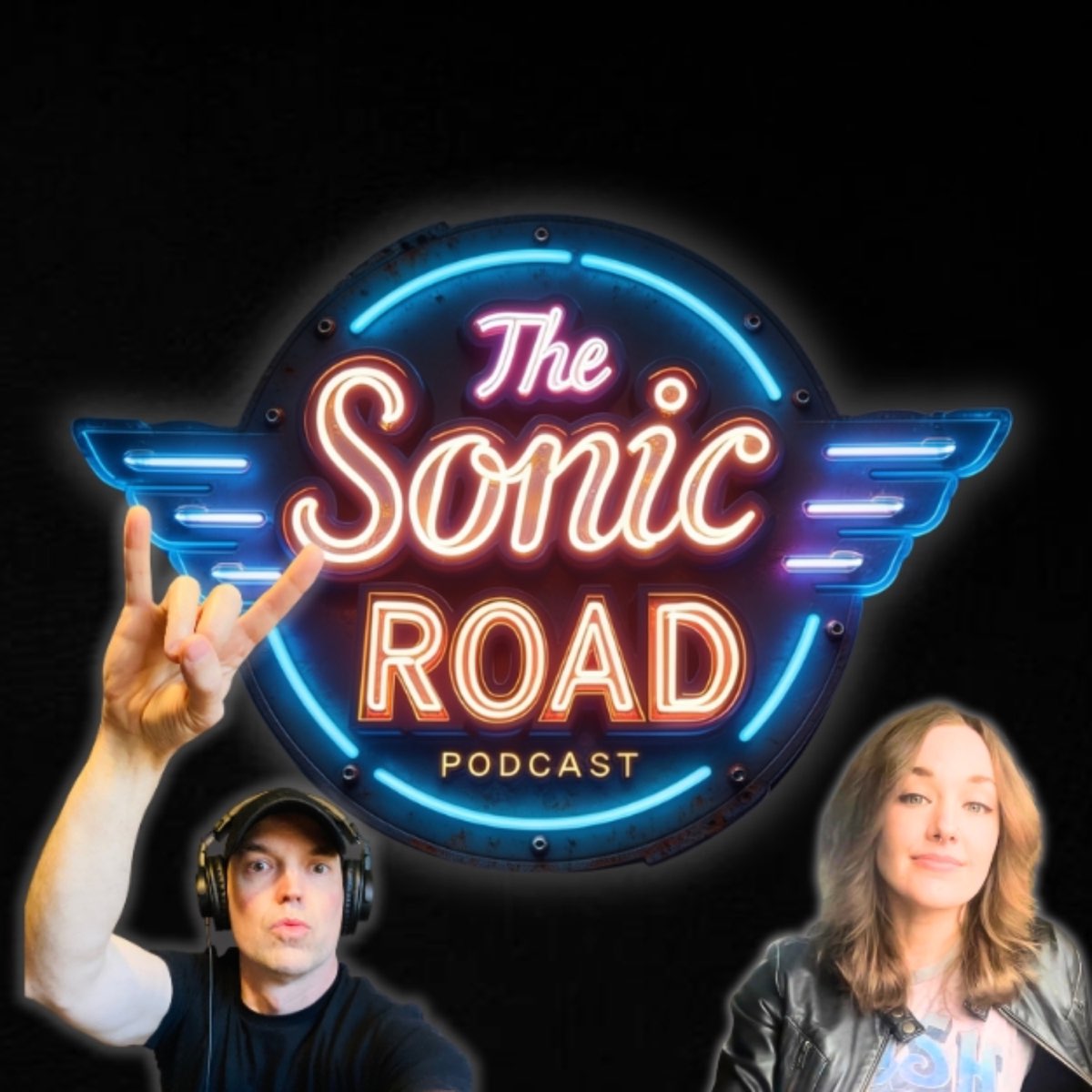
- THE SHOW · The Sonic Road Podcast · Cleveland, Ohio · long-form rock & metal interviews, about twice a month · 64 episodes and rolling
- THE CREW · Beau McGranahan (founder/host) · Becky Franzel (co-host)
- THE ROAD HERE · 114 episodes of Rock Savages before anyone heard of The Sonic Road
- THE COUCH · Dave Krusen (Pearl Jam) · Pepper Keenan & Kirk Windstein (Down) · Ron Nevison · Jay Buchanan & Michael Miley (Rival Sons) · Nick DiSalvo (Elder) · Slomosa · High Desert Queen
- THE MAN · twenty years behind the kit in Akron’s Burn Blue Sky — Crowbar, Red Fang, Helmet and Kylesa support slots on the résumé
- LISTEN · Spotify · Apple Podcasts · YouTube · newsletter · @thesonicroad on Instagram, Facebook, X & TikTok
Understand where this show broadcasts from. “Rock and roll” got its name in Cleveland — disc jockey Alan Freed started hammering the phrase into the American vocabulary on WJW radio in 1951, and on March 21, 1952 he threw the Moondog Coronation Ball at the Cleveland Arena: the first major rock and roll concert in history, so oversold the fire marshals shut it down in the middle of the opening set. The Rock & Roll Hall of Fame sits on Cleveland’s lakefront for exactly that reason. Add WMMS, the Agora, and every band that ever white-knuckled a winter load-in on Euclid Avenue, and you get a city where talking seriously about heavy music isn’t media — it’s civic duty. The Sonic Road is that tradition, carried on in long form: Rust Belt ears, national couch.
Well, you’ve got to be tough to live in Cleveland. It’s a bit like Seattle in the way that the winters force you inside, which is a great time to practice and write songs. The good news is that Cleveland is obviously a rock n roll city, so I have been fortunate enough to play some killer shows in Ohio over the years.
Podcasting scratches the artistic itch in some weird way. If you are doing everything yourself, you create the episode while learning to better communicate with other humans. Additionally, you get to create the artwork and become a better listener. All of those things you can learn in a band as well. I found those parallels interesting.
Dave Krusen was pretty early in the journey with The Sonic Road Podcast. There was no real catalyst moving the needle aside from just reaching out and asking Dave if he wanted to chat. A lot of musicians who have done big things are usually very grounded and humble enough to talk to newer podcasts, which is awesome. That was another great lesson for me. Stay humble, no matter what you achieve and you will go places.
Every conversation is different so I don’t really have a formula, other than letting genuine curiosity lead me with the guests. I try to end every interview asking the guest another independent artist that they are listening to, so we can help spread the word.
I learn something new almost every time I talk to the guests. Everyone has so many different perspectives so talking with these folks who are professionals talk about their touring and recording experiences is awesome. I can relate to a lot of the stories from my own perspective, but everyone has a different approach so its cool to drag these stories out for everyone to hear.
Nothing special here. If I do interviews on location, just some good ol’ Go-Pro’s or a Zoom H6 will do. All remote interviews are plain old Zoom calls. Nothing too sexy, although my Zoom H6 is a total beast. I have recorded drums with that thing and it won’t die.
Pepper Keenan gave me some cool perspectives on live recording in the studio, and also writing and recording DOWN II in 28 days at Nodferatu’s Lair. That dude has stories for days. Ron Nevison gave me all the goods about when he used Ronnie Lane’s mobile recording unit to record Led Zeppelin and Bad Company. He was a huge part in building that mobile unit, which is now legendary in the world of rock n roll. It doesn’t get much cooler than that.
I’m not sure about misunderstood, but overlooked jobs are definitely a thing. I try to help put the people in the spotlight that aren’t the rock stars per se, but are really important elements of helping the magic happen. There is usually an unseen and extremely talented team behind the scenes that are bringing these amazing albums to the public.
and you will go places.”
Cilantro in Cleveland — directly next door to The Grog Shop. They are doing good work over there for a simple and cheap, pre-show snack! Hit em up!
I just finished Kim Thayil’s book from Soundgarden which came out this year. Before that was Cameron Crowe’s book The Uncool. My main albums this year has been COC’s Good God/Baad Man, The Black Crowes A Pound of Feathers, Elder’s Through Zero and Moon Destroy’s Omni just to name a few. This year has been overwhelming with all other new music coming out, so I am still playing catch up with my listening time.
Man, I’m always a fan first and try to keep the conversations that way as much as possible without “fan-boying” out. One thing I don’t want to become is “the press” or a critic if that makes sense. My angle is to be what I really am, which is a musician and hopefully the guests that come on the show can relate and trust me to open up. Also it should be fun so I hope that translates with the listener as well.
Well, I quit my last show because I burned myself out. This time around I tend to pace myself a little more so it stays fun. I think people in the creative space these days need to do it for the right reasons, which should be passion first, and everything else second. One misconception is that there is money in this. Guess what? There isn’t, unless you are Joe Rogan or backed by a major corporation. I gauge my successes on having a good talk with a guest I have wanted to talk to for a long time. When that happens, that IS the success. Everything else is just icing on the cake. Although, a little money would be nice.
Our goal for 2027 is to do our best and keep bringing great conversations about rock n roll music. On the music side, I am working with my bro Stone from Burn Blue Sky and Hate Theory on some new songs and so far it’s sounding killer! To be clear, this will be a totally new project, still to be named. We are still in the early stages of writing, but we will keep everyone posted as the project progresses.
That’s a scoop, friends: a brand-new, still-unnamed heavy project is forming in Cleveland — Beau McGranahan and Stone (Burn Blue Sky / Hate Theory), early days, songs already sounding killer. The desk will be watching. You’ll hear it here when it has a name.
Rock n roll fans are the best community in the world! Keep on buying records and going to the shows of your favorite bands, especially the smaller ones. They need the support the most!
with a guest I’ve wanted for a long time.
When that happens, that IS the success.”
That’s the whole ethos, and it’s why The Sonic Road is the first name on our collaborators list: fan first, musician always, zero clickbait, and a microphone pointed at the people who actually make the records breathe. Go subscribe to everything below — and if you run into Beau between load-in and doors, you know where he’s eating.
Receipts · Sources
1. The Sonic Road — official site & newsletter — show, hosts, cadence, Cleveland home base.2. Spotify · Apple Podcasts · YouTube · videos.thesonicroad.com · all links. Cover art © The Sonic Road Media, LLC.
3. Burn Blue Sky: Akron heavy rock, founded 2000 — support slots for Crowbar, Red Fang, Helmet, Dax Riggs, Kylesa (band press / Cleveland Scene, 2016).
4. Cleveland lore: Alan Freed, WJW 1951; Moondog Coronation Ball, Cleveland Arena, March 21, 1952; Rock & Roll Hall of Fame, 1995.
5. Interview conducted by email, November 2026; answers run exactly as Beau wrote them, light typo pass only. One question went unanswered and was retired; the one-word lightning round is being saved for a Green Room night. — The Desk